Why Dual-Port 48A Level 2 Chargers Are a Smarter Choice for Commercial Parking
Learn why dual-port 48A Level 2 chargers are a practical choice for commercial parking, offering strong site efficiency, balanced performance, and better ROI for shared charging applications.
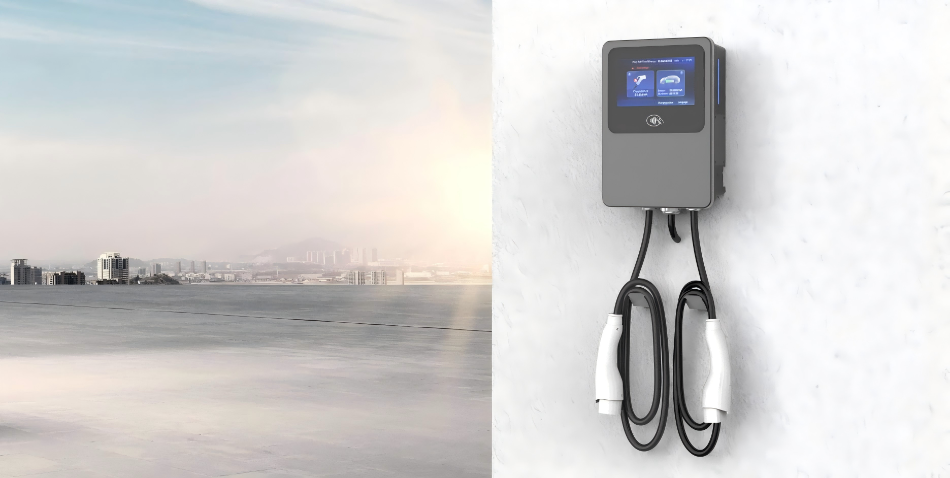
Why Dual-Port 48A Level 2 Chargers Are a Smarter Choice for Commercial Parking
When planning EV charging for commercial parking, higher AC power is not always the best answer. In many real-world projects, the priority is not the highest number on paper, but the best balance of compatibility, installation cost, site efficiency, and return on investment.
That is why 48A + 48A dual-port Level 2 chargers make sense for many commercial applications.
Higher AC Power Does Not Always Create More Value
In AC charging, vehicle onboard charger limitations often determine how much power can actually be used. This means a higher-amperage charger does not automatically deliver a better charging experience for every vehicle.
For commercial sites, that matters. Workplace parking, apartments, hotels, and retail locations are usually destination-based charging environments where vehicles stay parked for longer periods. In these cases, practical charging performance and broad vehicle compatibility are often more important than pursuing the highest AC output.
Why 48A + 48A Is a Strong Commercial Fit
A 48A + 48A dual-port configuration offers a practical balance for commercial deployment. It provides reliable Level 2 charging while allowing two vehicles to charge at the same time.
For operators, this means better charger availability, improved space efficiency, and stronger day-to-day usability. For site owners, it supports a more cost-conscious deployment strategy without sacrificing real commercial value.
Better ROI Starts with Better Project Fit
Commercial EV charging is not just about charger output. It is also about infrastructure cost, breaker requirements, parking layout, and long-term site utilization.
Higher-amperage AC chargers can increase electrical and installation costs without always delivering proportional operational benefits. A well-matched 48A + 48A solution can often provide better ROI by supporting more vehicles, improving charger utilization, and keeping deployment practical.
Dual-Port Design Solves Real Parking Challenges
In commercial parking environments, space is often limited. A dual-port charger helps maximize charging access without adding unnecessary installation complexity.
- Workplace parking
- Retail and commercial sites
- Apartment and multi-family properties
- Hotels and hospitality locations
- Public and shared-use parking areas
Commercial Features Matter Too
For commercial charging, user experience and operator convenience matter just as much as charging output. Features such as a 10-inch touchscreen, POS integration, RFID, OCPP communication, and remote monitoring can improve payment convenience, simplify operation, and create a more professional charging experience.
Conclusion
For many commercial parking projects, 48A + 48A dual-port Level 2 charging is not a compromise. It is often the smarter choice.
It offers a strong balance of charging performance, vehicle compatibility, installation practicality, and site efficiency. For operators looking to build commercial charging that is usable, scalable, and cost-conscious, dual-port 48A is often the right place to start.
FAQ
Is 80A always better than 48A for commercial AC charging?
No. In many commercial applications, vehicle limits and parking duration make 48A a more practical choice.
Why choose dual-port charging?
Dual-port chargers improve charger availability, save space, and support two vehicles at once.
Is 48A enough for commercial sites?
For many workplace, apartment, hospitality, and retail applications, yes.