Aug 24, 2026
Small EV Charging Operators in North America: Why Utilization Matters More Than Charger Count
For small charging operators, the biggest risk is not buying too few chargers. It is building too much power before the site has enough repeat charging demand.
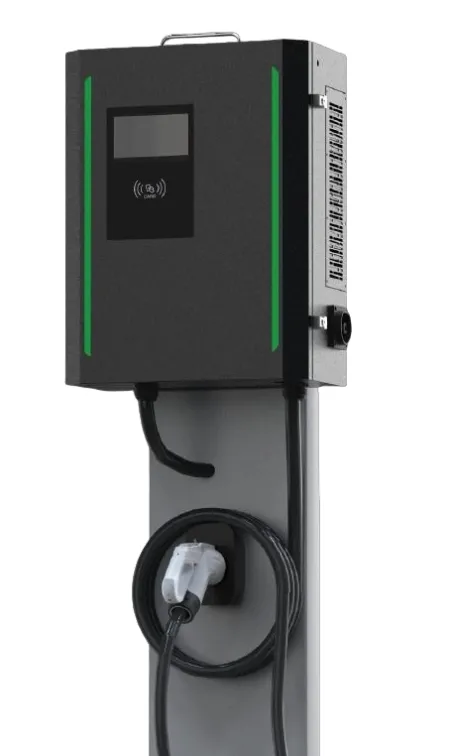
The Pain: A New Charging Site Can Look Busy on Paper and Still Lose Money
Many small EV charging operators in North America start with the same assumption: more chargers and higher power will make the site more attractive. A four-port DC fast charging layout looks professional. A 150 kW or 240 kW charger sounds more competitive than a 40 kW or 80 kW charger. But the real business question is quieter: how many paid charging sessions will happen every day, and at what energy volume?
The charging business is not like selling a product from a shelf. Once the hardware, installation, networking, service plan, parking layout, signage, transformer capacity, and maintenance contract are in place, a large part of the cost becomes fixed. If the station is underused, those fixed costs are spread across too few kilowatt-hours. That is why low utilization hurts small operators more than large networks. Large networks can average performance across many sites. A small operator may have only one or two locations, so one weak site can absorb the entire margin.
This is becoming more important in 2026. The North American fast-charging market is improving, but it is also becoming more competitive. Reliability is rising, more chargers are being added, and drivers are learning which stations work. A small operator cannot win only by installing hardware. The site has to be sized, priced, and operated around real utilization.
The Problem Behind the Problem: Power Is Not the Same as Revenue
A charger's rated power is a technical number. Revenue depends on sessions, dwell time, vehicle acceptance rate, tariff structure, and repeat traffic. A 240 kW charger installed at a low-traffic site may deliver far less paid energy than a smaller charger placed at a workplace, retail plaza, apartment property, fleet depot, or highway service stop with predictable demand.
Research on U.S. corridor fast charging highlights the same economics: capital cost, operating cost, utility tariffs, incentives, and utilization all shape whether a site can break even. The key lesson for small operators is simple: utilization drives cost per kilowatt-hour. When utilization is low, each delivered kilowatt-hour carries more of the fixed cost burden.
This is why small operators should avoid copying the largest network design. A national CPO can install large hubs to defend market share. A small operator needs payback discipline. That means choosing charger power according to site behavior, not only according to what looks strongest in a brochure.
A Better Approach: Build the First Site as a Measurable Operating Asset
Before selecting hardware, small operators should answer five questions:
- Who will charge here: residents, employees, ride-share drivers, retail customers, fleet vehicles, hotel guests, or highway travelers?
- How long do they naturally stay at the site?
- Will charging be a destination service, a convenience feature, or a revenue business?
- What grid capacity is already available?
- What utilization level is needed to cover monthly costs?
For many small sites, AC charging or medium-power DC charging can be a better first step than oversized fast charging. A hotel, workplace, apartment, or parking facility may need reliable Level 2 charging more than high-power DC. A small retail or roadside site may start with 30 kW, 40 kW, 60 kW, or 80 kW DC fast charging before expanding to 120 kW or higher. The goal is not to look small. The goal is to match charger speed to parking behavior and cash flow.
Smart deployment also means leaving room to expand. Operators can plan conduit, panel capacity, parking layout, backend software, and charger foundations so additional ports can be added later. This gives the business a growth path without forcing full capital spend on day one.
How Tiyzo Tech Helps Small Operators Reduce First-Site Risk
Tiyzo Tech works with partner factories to support AC and DC EV charging projects for overseas operators. For small North American operators, the most useful support is often not just "which charger is cheapest." It is matching the charger type to the site model.
For lower-cost entry sites, we can help compare AC wall-mounted chargers, dual-gun AC units, compact DC chargers, and medium-power DC fast chargers. For sites planning future expansion, we can discuss cabinet format, connector options, backend compatibility, weather protection, branding, installation environment, and custom configuration requirements.
Conclusion: Small Operators Should Buy for Utilization First
The strongest first charging site is not always the one with the highest kilowatt rating. It is the one with a realistic utilization plan, manageable power cost, reliable equipment, and a clear reason for drivers to return.
If you are planning a charging site in North America, start with the business pattern first: who charges, how often, how long, and how much power they actually need. Then select the charger around that reality. Tiyzo Tech can help you compare AC and DC options for a phased deployment plan.