Jul 29, 2026Industry Insights
EV Charging Standards & Connectors Explained
Complete guide to EV charging connectors and standards: Type 1, Type 2, CCS1, CCS2, GB/T, CHAdeMO, NACS, and MCS. Learn which connector your EV uses and where each standard is used worldwide.
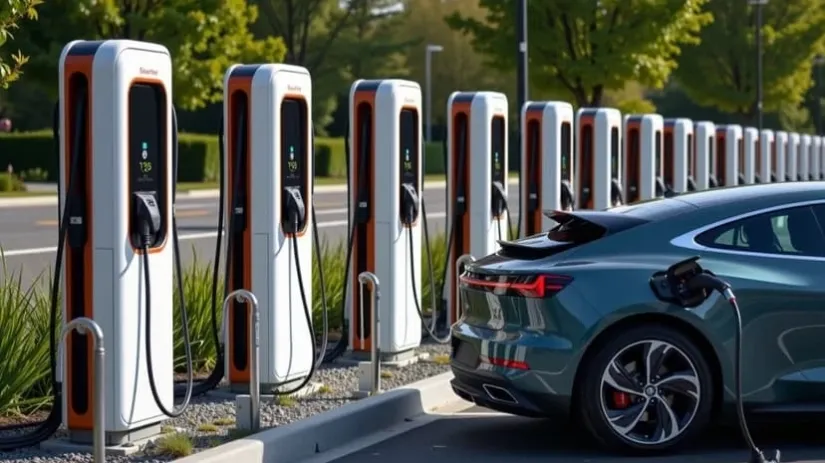
EV Charging Standards & Connectors Explained (2026 Guide)
Updated July 2026 — Every plug, every standard, every region. No more guessing.
One of the most confusing aspects of EV ownership is figuring out which charging connector your car uses. There are at least 7 different plug types in use worldwide, and they're not interchangeable. Buy the wrong charger or pull up to the wrong station, and you're stuck.
This guide covers every EV charging connector and standard — what it looks like, where it's used, and which cars use it. Bookmark this page; you'll need it.
Table of Contents
- FAQ
Quick Overview: All Connectors at a Glance
Connector | Type | Max Power | Primary Region | Typical Cars |
|---|---|---|---|---|
Type 1 (J1772) | AC | 7.4–19.2 kW | North America (older) | Nissan Leaf, Chevy Volt, Ford Focus EV |
Type 2 (Mennekes) | AC | 3.7–43 kW | Europe, Asia, Australia | Tesla Model 3/Y, VW ID.4, BMW iX, Hyundai Ioniq 5 |
CCS1 | DC | 50–500+ kW | North America | Chevy Bolt, Ford Mustang Mach-E, Rivian |
CCS2 | DC | 50–960+ kW | Europe, Asia-Pacific, India | Tesla Model 3/Y, Porsche Taycan, Hyundai Ioniq 5 |
GB/T | DC | 50–250 kW | China | BYD, NIO, Xpeng, Geely, Wuling |
CHAdeMO | DC | 50–150 kW | Japan (declining) | Nissan Leaf, Toyota Mirai (older) |
NACS (J3400) | AC + DC | Up to 1 MW | North America (emerging) | Tesla, Ford, GM, Rivian (2024+) |
AC Charging Connectors
Type 1 (J1772 / SAE J1772)
Type 1 is the original North American AC charging standard. It has 5 pins and supports single-phase power up to 19.2 kW (80A at 240V), though most installations are 7.2 kW (30A).
Key facts:
- Pins: 5 (L1, Neutral, Earth, Proximity, Pilot)
- Max power: 19.2 kW (Level 2, 80A)
- Common power: 7.2–7.4 kW (30A)
- Regions: North America, Japan (as part of CHAdeMO combo)
- Cars: Older EVs — Nissan Leaf (pre-2018), Chevy Volt, Ford Focus Electric, early BMW i3
- Status: Being phased out in favor of NACS/J3400
Type 1 connectors have a mechanical latch that locks the plug in place during charging. They're weatherproof (IP54+) and can be used outdoors.
Type 2 (Mennekes / IEC 62196-2)
Type 2 is the dominant AC charging standard in Europe and most of the world outside North America. It has 7 pins and supports both single-phase and three-phase power, up to 43 kW (63A three-phase).
Key facts:
- Pins: 7 (L1, L2, L3, Neutral, Earth, Proximity, Pilot)
- Max power: 43 kW (three-phase, 63A)
- Common power: 7.4 kW (single-phase) or 11–22 kW (three-phase)
- Regions: Europe, Australia, New Zealand, India, Southeast Asia, South America
- Cars: Virtually all EVs sold in Europe — Tesla Model 3/Y, VW ID.4, BMW iX, Hyundai Ioniq 5, Renault Zoe, Mercedes EQS
- Status: Standard, widely adopted
Type 2 is more versatile than Type 1 because it supports three-phase power. A 22 kW Type 2 charger can fill a 60 kWh battery in under 3 hours — faster than any single-phase Type 1 setup.
Tesla's European connector: Tesla uses a modified Type 2 connector that supports both AC and DC (up to 250 kW) without a separate DC plug. This is unique to Tesla's European Supercharger network.
DC Fast Charging Connectors
CCS1 (Combined Charging System Type 1)
CCS1 is essentially a Type 1 (J1772) connector with two additional large DC pins added below. This "combo" design means a single inlet on the car can accept both AC (Type 1) and DC (CCS1) charging.
Key facts:
- Base: Type 1 (J1772) + 2 DC pins
- Max power: 500+ kW (latest EVs)
- Common power: 50–350 kW
- Voltage: 400V–1000V
- Regions: North America (before NACS transition)
- Cars: Chevy Bolt EV/EUV, Ford Mustang Mach-E, Ford F-150 Lightning, Rivian R1T/R1S, Hyundai Ioniq 5 (US), Kia EV6 (US)
- Status: Being replaced by NACS (J3400) in North America
CCS2 (Combined Charging System Type 2)
CCS2 is the same concept as CCS1 but built on the Type 2 connector. It's the dominant DC fast charging standard in Europe, Asia-Pacific, India, and Australia.
Key facts:
- Base: Type 2 (Mennekes) + 2 DC pins
- Max power: 960+ kW (ultra-fast stations)
- Common power: 50–360 kW
- Voltage: 400V–1000V
- Regions: Europe, India, Australia, Southeast Asia, Middle East, Africa
- Cars: Tesla Model 3/Y (Europe), Porsche Taycan, Hyundai Ioniq 5 (Europe), Kia EV6 (Europe), Audi e-tron, Polestar 2
- Status: Dominant global standard
CCS2 is the connector you'll see on virtually every public DC fast charger outside of China, Japan, and North America. Ultra-fast CCS2 stations (480 kW+) use liquid-cooled cables to handle the high current.
GB/T (China National Standard)
GB/T 20234 is China's national EV charging standard. It's used exclusively in China and uses completely different connectors for AC and DC — they're not interchangeable with Type 1/2 or CCS.
Key facts:
- AC connector: 7 pins, up to 27.7 kW (single-phase or three-phase)
- DC connector: Distinct large rectangular plug, 2 DC pins + communication pins
- Max DC power: 250 kW (commonly 60–180 kW)
- Voltage: 750V (standard), 1000V (newer)
- Regions: China (mainland)
- Cars: BYD (all models), NIO (ET5, ET7, ES6), Xpeng (P7, G9), Geely, Wuling Hongguang Mini EV, Li Auto
- Status: Mandatory in China; ChaoJi (next-gen) being developed as successor
GB/T DC connectors use a unique communication protocol (GB/T 27930) that differs from CCS's ISO 15118. Adapters exist but are not always reliable for fast charging.
CHAdeMO (Japan)
CHAdeMO was the first widely deployed DC fast charging standard, launched in Japan in 2010. It's a large, round connector separate from the AC inlet.
Key facts:
- Connector: Large round plug, 10 pins
- Max power: 150 kW (practical), 400 kW (theoretical)
- Common power: 50 kW
- Voltage: 500V (standard), up to 1000V (latest)
- Regions: Japan (declining), some legacy stations in Europe and North America
- Cars: Nissan Leaf, Toyota Mirai (older), Peugeot iON, Citroën C-Zero
- Status: Being phased out globally; CCS and NACS are replacing it
CHAdeMO's unique advantage was bidirectional charging (V2G/V2H) support from the beginning, but CCS has since caught up with ISO 15118-20.
NACS / SAE J3400 (North America)
NACS (North American Charging Standard), now formally standardized as SAE J3400, is Tesla's connector design opened to all automakers in 2022. It combines AC and DC charging in one compact plug — smaller than CCS1 but capable of up to 1 MW.
Key facts:
- Connector: Compact, single plug for AC + DC
- Max power: 250 kW (Supercharger V3), 1 MW (Supercharger V4 with liquid-cooled cable)
- AC power: Up to 19.2 kW (80A single-phase)
- Voltage: 400V–1000V
- Regions: North America
- Cars: Tesla (all), Ford (2024+), GM (2024+), Rivian (2024+), Volvo, Polestar, Nissan, Mercedes, and most other manufacturers adopting by 2025–2026
- Status: Becoming the unified standard in North America
NACS is a game-changer for North America. Its compact size, combined AC+DC capability, and Tesla's extensive Supercharger network make it the most convenient connector for North American EV owners.
Specialized Connectors
Type 6 (Two-Wheeler DC Connector)
Type 6 is a DC charging connector designed specifically for electric two-wheelers (e-bikes, scooters, mopeds, tricycles). It's smaller and lower-power than automotive DC connectors.
Key facts:
- Max power: 3–10 kW
- Voltage: 48V–96V typically
- Charge time: 30–60 minutes (from empty to full)
- Regions: India (BIS-approved), Southeast Asia, China
- Vehicles: Electric scooters, e-bikes, e-mopeds, e-tricycles, delivery vehicles
- Standards: BIS (Bureau of Indian Standards) approved for Indian market
Type 6 is important for emerging markets where two-wheelers are the primary mode of transportation. Countries like India have millions of electric two-wheelers, and Type 6 enables fleet operators to charge quickly between rides.
MCS (Megawatt Charging System)
MCS is an emerging standard for ultra-high-power charging of heavy-duty vehicles — semi-trucks, buses, and construction equipment. It's being developed by the CharIN industry consortium.
Key facts:
- Max power: 3.75 MW (3,750 kW)
- Current: Up to 3,000A
- Voltage: Up to 1,250V
- Status: Standard published (2024), pilot deployments beginning
- Use case: Electric semi-trucks (Tesla Semi, Volvo VNR Electric, Mercedes eActros), electric buses
MCS represents the next frontier of EV charging — making long-haul electric trucking viable by enabling 30-minute charging stops for 500+ kWh batteries.
Regional Standard Map
Region | AC Standard | DC Standard | Notes |
|---|---|---|---|
North America | Type 1 → NACS | CCS1 → NACS | NACS becoming unified standard by 2025–2026 |
Europe (EU) | Type 2 | CCS2 | Mandatory by EU regulation |
United Kingdom | Type 2 | CCS2 | Same as EU |
China | GB/T AC | GB/T DC | National standard; ChaoJi being developed |
Japan | Type 1 | CHAdeMO → CCS1 | Transitioning to CCS/ChaoJi |
India | Type 2 | CCS2 + Type 6 (2W) | Type 6 for two-wheelers (BIS approved) |
Australia / NZ | Type 2 | CCS2 | Aligned with Europe |
Southeast Asia | Type 2 | CCS2 | Varying adoption rates |
Middle East | Type 2 | CCS2 | Growing infrastructure |
South America | Type 2 | CCS2 | Aligned with Europe |
Africa | Type 2 | CCS2 | Early stage infrastructure |
Adapters & Compatibility
Adapters allow you to charge at stations with different connectors. Here's what works and what doesn't:
From | To | Adapter Available? | Max Power | Notes |
|---|---|---|---|---|
CCS1 | NACS | ✅ Yes | 250 kW | Official adapters from Ford, GM |
NACS | CCS1 | ✅ Yes | 250 kW | Available from third parties |
CCS2 | GB/T | ✅ Yes | 200 kW | Common for cross-border travel in Asia |
GB/T | CCS2 | ✅ Yes | 200 kW | Common for cross-border travel in Asia |
CHAdeMO | CCS1 | ✅ Yes | 50 kW | Limited power, being phased out |
CHAdeMO | CCS2 | ✅ Yes | 50 kW | Limited power, being phased out |
Type 1 | Type 2 | ✅ Yes | 7.4 kW | AC only, passive adapter |
Type 2 | Type 1 | ✅ Yes | 7.4 kW | AC only, passive adapter |
Important: Adapters introduce resistance and potential failure points. For regular daily charging, use the native connector. Reserve adapters for travel and emergencies.
Communication Protocols
Beyond the physical connector, chargers and vehicles communicate using digital protocols:
Protocol | Used By | Features |
|---|---|---|
IEC 61851 | Type 1, Type 2 (AC) | Basic pilot signal, power negotiation |
ISO 15118 | CCS1, CCS2 (AC + DC) | Plug & Charge, smart charging, bidirectional |
GB/T 27930 | GB/T (China) | Chinese national standard communication |
CHAdeMO protocol | CHAdeMO | Can bus-based, bidirectional support |
OCPP | All (charger ↔ network) | Open Charge Point Protocol — station management, billing, remote diagnostics |
ISO 15118 Plug & Charge is becoming the gold standard. With it, you simply plug in and the car and charger negotiate authentication, authorization, and billing automatically — no app, no card, no QR code scan.
Frequently Asked Questions
How do I know which connector my EV uses?
Check your car's charging port. If it has a small 5-pin connector, it's Type 1 (North America, older). If it has a 7-pin round connector, it's Type 2 (Europe, Asia). For DC, look for the two large pins below the AC connector — that's CCS. If the port is a large rectangular shape, it's GB/T (China). Tesla vehicles in North America use NACS.
Can I use a CCS2 charger with a CCS1 car?
Not directly — the connectors are physically different. You'd need a CCS2-to-CCS1 adapter, which are rare and expensive. In practice, CCS1 and CCS2 are regional standards; you won't normally encounter the wrong one unless you're shipping your car overseas.
What's happening with CHAdeMO?
CHAdeMO is being phased out globally. Nissan stopped including it on new Leaf models. Most charging networks are removing CHAdeMO plugs or converting them to CCS. If you have a CHAdeMO-only car, plan for adapter purchases or vehicle replacement in the coming years.
Is NACS better than CCS?
NACS is more compact and supports both AC and DC in one plug, which is convenient. However, CCS2 (used in Europe) is equally capable in terms of power and features. The main advantage of NACS in North America is access to Tesla's Supercharger network.
Do I need to worry about voltage compatibility?
Most modern EVs support 400V architectures and all chargers support 400V. Newer EVs (Hyundai E-GMP, Porsche Taycan, Kia EV6) support 800V, which enables faster charging at 800V-capable stations. 400V cars can still charge at 800V stations — the charger steps down the voltage. However, 800V cars at 400V-only stations will charge slower.
What connector should I specify for a commercial installation?
It depends on your region. In Europe: Type 2 (AC) + CCS2 (DC). In North America: NACS (2025+) with CCS1 compatibility during transition. In China: GB/T. In India: Type 2 + CCS2 + Type 6 (for two-wheelers). Always consult local regulations.
Summary: Know Your Plug
The EV charging connector landscape can feel overwhelming, but it boils down to a few key takeaways:
- Europe, India, Australia: Type 2 (AC) + CCS2 (DC) — done.
- North America: NACS is the future; CCS1 is the present.
- China: GB/T for everything.
- Japan: Transitioning from CHAdeMO to CCS.
- Two-wheelers: Type 6 (DC, 3–10 kW) in India and Southeast Asia.
- Heavy-duty future: MCS for megawatt-class truck charging.
When buying an EV charger, always verify the connector type matches your vehicle's inlet. When deploying chargers commercially, match the connector to your regional standard and consider multi-connector stations for transitional markets.
Need help choosing the right charger? Charger-in manufactures EV chargers with Type 1, Type 2, CCS1, CCS2, GB/T, and Type 6 connectors. Contact us for expert guidance on your charging project.