Sep 10, 2026
How Demand Charges Break a Charging Site's Economics — and the Load Management Fix
A DC fast charger can cost you more in utility demand fees than in electricity. Here's how demand charges actually work, why fast charging is so exposed, and how load management flattens your peak.
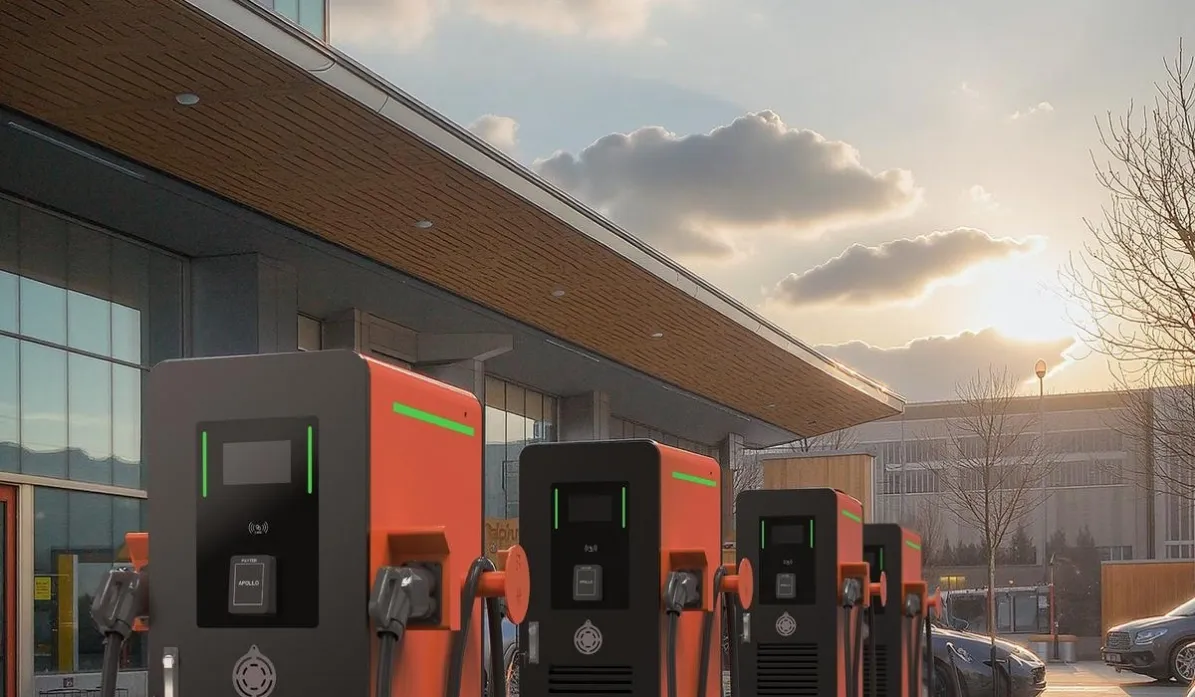
Here's the part of charging that surprises new operators: the biggest electricity-related cost on a DC fast charging site is often not the energy you deliver — it's the peak demand your site creates. A charger that spikes the building's maximum power draw for a few minutes can inflate your bill for a whole month. This guide explains how demand charges actually work, why fast charging is especially exposed, and how load management can flatten your peak and protect your margin.
The pain: you pay for a peak that lasts minutes
Commercial and industrial electricity bills often include a demand charge — a fee based on the highest power draw (in kilowatts) your site hits during a set interval within the billing period. The demand interval varies by utility, so check your own rate schedule. But the catch is the same everywhere: a single spike re-bases your peak for the month, and you pay for that peak regardless of how much energy you actually sold.
For a small operator the math is brutal. You might be delivering a lot of energy but hitting a severe peak for just a handful of minutes, and the demand charge eats a meaningful chunk of your margin.
Why DC fast charging is especially vulnerable
The problem is worst for DC fast charging because it's a concentrated load. A single fast charge is a short, high-power draw — a 120 kW unit pulls a lot in a short time, so it's easy to create a spike. Multiple units together multiply the risk: if three DC units are all ready to deliver when three cars arrive, the site can hit a coincident peak far higher than any single vehicle needs.
A better approach: flatten the peak with load management
Load management directly targets this. Instead of letting every charger take the full rated current whenever a vehicle plugs in, the system shapes the draw so the site's peak stays under control — by limiting the charger maximum, sequencing session starts, or dynamically balancing against the building's actual load.
Load management isn't free power
One thing a responsible operator should understand — and a supplier should be honest about — is that load management reallocates existing capacity; it doesn't create new capacity. If a site genuinely can't support the chargers it needs, no amount of balancing will change the physical limits.
How Tiyzo helps
We build load management into the platform, not as an afterthought. Tiyzo's OCPP-based system supports smart-charging profiles that let you set per-unit limits and schedules, so you can shape the site's draw instead of accepting whatever peak the parking lot happens to create. And because we cover AC from 7 kW to 22 kW and DC from 60 kW to 350 kW, the same platform can manage a mixed site.
FAQ
What is a demand charge? A fee based on the highest power draw (in kW) your site hits during a set interval in the billing period.
Do DC fast chargers really cause demand charges that hurt? They can. A 120 kW unit pulls a lot in a short time, so a single fast charge can spike your peak.
Does load management actually reduce my bill? It can, if high peaks are the cause.
Is load management free power? No. It reallocates existing capacity; it doesn't create new capacity.
Conclusion
For a small DC fast charging site, the demand charge can quietly be the biggest line on the electricity bill. The fix isn't to charge less — it's to charge smarter, flattening the peak so you pay for the energy you deliver, not the minutes of maximum draw.