Sep 10, 2026
Load Balancing for EV Chargers: How to Add More Stalls Without an Electrical Upgrade
The cheapest way to add more EV chargers isn't more copper — it's smarter allocation of the power you already have. Here's how load balancing works and why it depends on both software and hardware.
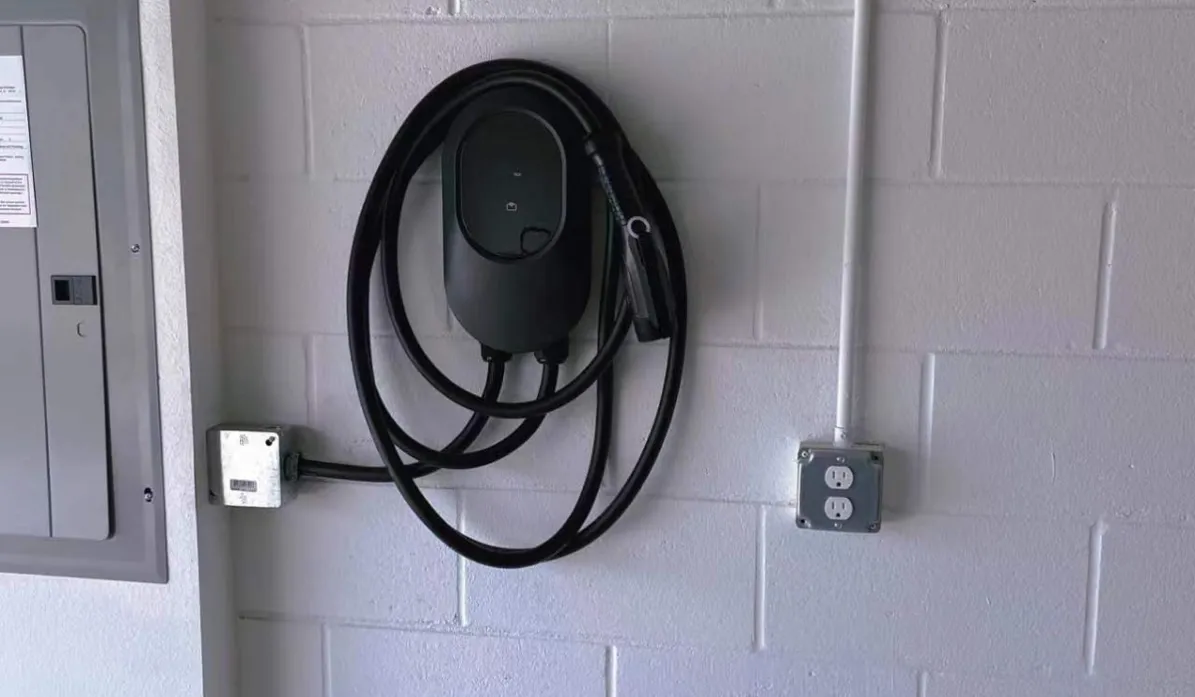
The most common reason a charging project stalls isn't missing chargers. It's a building that's already near its electrical limit — a full service panel, a feeder at capacity, or a service that would need a utility upgrade to add one more circuit. That's where load balancing becomes the difference between “we can install four stalls” and “we can only install two.”
What Load Balancing Actually Is
Load balancing, sometimes called load management or dynamic load balancing (DLB), is the practice of allocating a limited amount of electrical capacity across multiple chargers so no single point exceeds the limit. Instead of giving every charger its full rated current and hoping they don't all peak at once, the system knows how much power is available and distributes it intelligently.
The key distinction is between energy (kWh) — how much you consume over time, which is rarely the constraint — and power (kW), the instantaneous demand that trips breakers and overloads transformers. Chargers draw power, so the site's power capacity is what you're budgeting. A building can have plenty of energy and still run out of capacity — a 22 kW three-phase unit is a continuous draw, and a 120 kW DC unit is several times that.
Different Sites, Different Answers
Because load management depends on what's already on the property, the right solution is always site-specific. An older office building near its service limit needs a different approach than a parking lot with spare capacity, or an industrial site with large loads already running.
How Tiyzo Helps
Tiyzo covers AC charging from 7 kW to 22 kW and DC fast charging from 60 kW to 350 kW, connected through an OCPP-based platform — so scheduling, power-sharing and capacity limiting are handled at the network level rather than by each unit guessing. We work from your actual site conditions to recommend hardware that fits what the site can actually support.